Products


 Solutions
 Industries
 Consulting
 Resources
 Company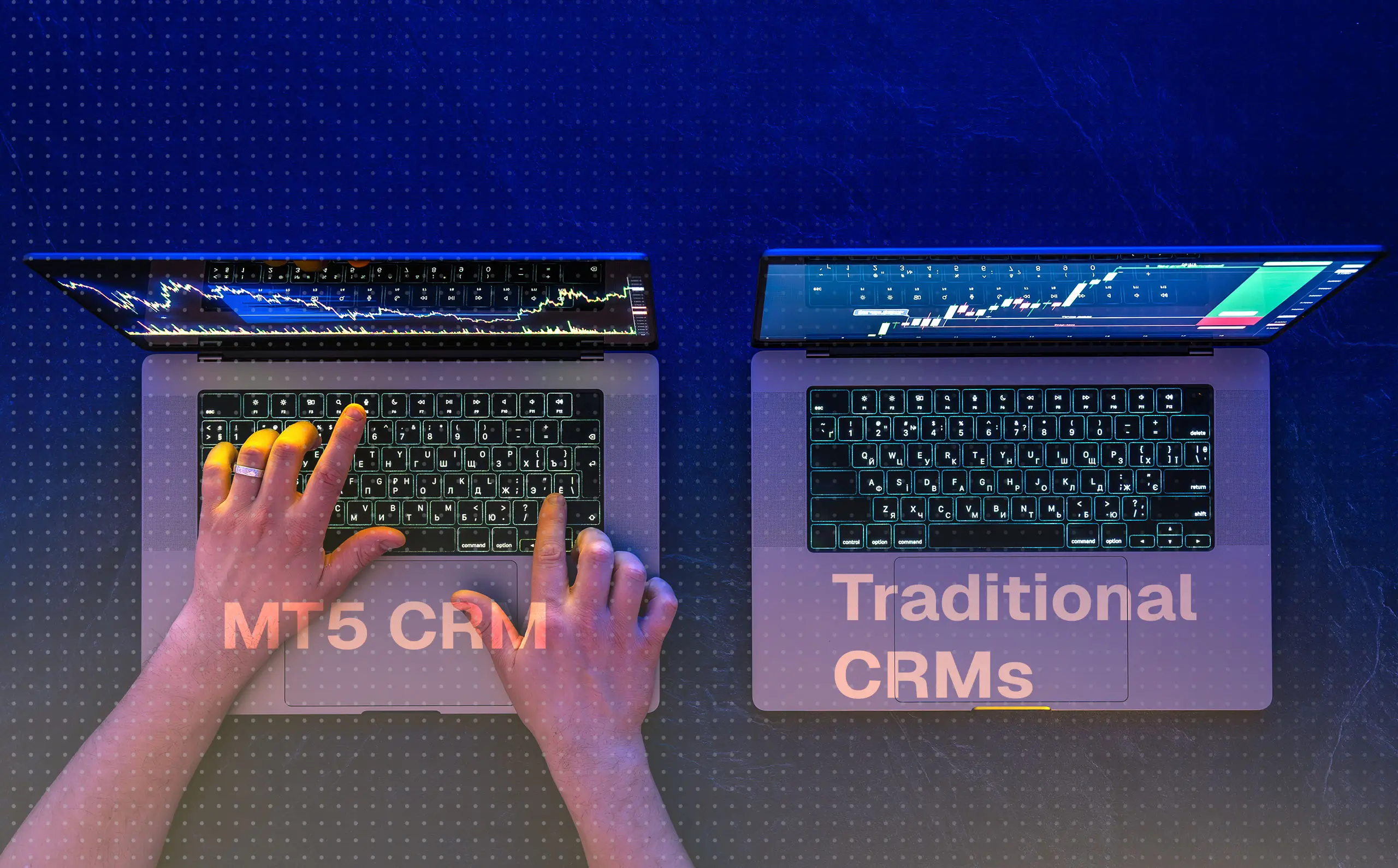
Traditional CRMs manage customer relationships, but they fall short in trading environments. This article explains how MT5 CRMs support brokers with real-time trading integration, compliance automation, financial operations, and scalable partner management.
 What is Traditional CRM?Core Functions of Traditional CRMsWhat is MT5 CRM?Key Functions of MT5 CRM SystemsKey Differences Between MT5 CRM & Traditional CRM SystemsWhy MT5 CRMs are Becoming the Industry StandardMT5 CRM vs. Traditional CRMs: Which One Should Businesses Choose?The Future of CRM in the Fintech & Trading Sector
Customer management has moved far beyond basic contact tracking, sales funnels, or generic CRM workflows. Brokers, fintech companies, and trading institutions now require systems that can integrate directly with trading platforms, automate compliance, manage financial operations, and support multi-tier partner ecosystems, all while maintaining a seamless client experience.
This is where the MetaTrader 5 CRM stands apart from traditional customer relationship management systems. As firms adopt advanced infrastructure to improve performance, strengthen compliance, and support real-time trading environments, MT5 CRMs have become the backbone of modern brokerage operations.
Designed specifically for brokers, trading firms, and financial institutions, the MT5 CRM offers features that surpass the capabilities of generic customer management systems. It connects directly with the MetaTrader 5 platform, supporting multi-asset trading and real-time operational needs.
At D24 Fintech, we emphasize the importance of scalable, integration-ready technology. Understanding the difference between traditional CRMs and MT5-specific CRM systems is essential for any brokerage seeking long-term competitiveness.
Traditional CRM helps businesses manage customer interactions, track leads, organize marketing activities, and maintain customer service records.
Popular traditional CRMs include Salesforce, HubSpot, Zoho, and Microsoft Dynamics.
While extremely effective for general business needs, these platforms are not built for brokerage-specific requirements, including:
This gap paved the way for specialized CRM systems customized to trading environments.
The MT5 CRM is a specialized customer and business management system built to integrate with the MetaTrader 5 (MT5) platform. It enables brokers to manage traders, streamline workflows, automate onboarding, and oversee financial operations, all from a unified dashboard. Unlike conventional CRMs, MT5 CRMs integrate directly with the MT5 Manager API, the core interface brokers use to manage clients, accounts, orders, and trading operations.
This unified ecosystem aligns trading, compliance, sales, and operational processes under a single platform.
Brokerages require operational depth that conventional CRMs simply cannot support.
Impact: MT5 CRMs offer unmatched transparency and instant operational control.
Impact: For regulated markets, an MT5 CRM significantly reduces compliance risk.
Impact: Brokerage operations rely heavily on secure, automated fund management.
Impact: Brokers gain real-time visibility into client performance and market exposure.
Impact: MT5 CRMs support scalable partner ecosystems crucial for global brokerage growth.
Impact: MT5 CRMs significantly reduce manual load and operational complexity.
Brokers today operate in a high-speed, high-volume environment where precision, compliance, and user experience directly influence business performance. MT5 CRMs have emerged as essential infrastructure because they offer:
From onboarding to trading activity, financial operations, partner management, and retention, everything is connected.
Automation eliminates repetitive tasks, allowing teams to focus on growth and strategy.
Integrated KYC/AML systems ensure brokers meet jurisdictional requirements without relying on external operations.
Clients can monitor balances, transactions, bonuses, and trading metrics from a single portal.
MT5 CRMs can efficiently support both small brokerages and enterprises with tens of thousands of active traders.
Real-time dashboards combine CRM insights with trading analytics for smarter operational planning.
Simply put, MT5 CRMs specialize in trading ecosystems, whereas traditional CRMs support a broader range of industries.
As fintech advances, CRM systems will keep upgrading. We expect to see:
At D24 Fintech, we envision a future where CRM systems become comprehensive command centers, unifying trading, compliance, operations, payments, and customer management within a single powerful ecosystem.
This communication is intended solely for informational and educational purposes and does not constitute financial, technical, investment, legal, or tax advice. D24 Fintech makes no representation or warranty as to the accuracy, completeness, or reliability of the information provided, including any third-party content, and accepts no liability for any loss or damage arising from its use.
Users are strongly encouraged to conduct their own due diligence, seek guidance from qualified professionals, and ensure compliance with applicable laws and regulations in their respective jurisdictions before engaging in any financial or digital asset activities.
Spot vs. Derivatives Trading: Key Differences Every Trader Should Know

Developer’s Guide To Building Advanced Spot Trading Platforms
Secure & Scalable Centralized Exchange Development Guide
CEX vs. DEX: Which Exchange Model Suits Your Business?
Blockchain Choices for Your Crypto Exchange Development
How to Build a Private Blockchain Network for Enterprise Solutions
Top Blockchain Frameworks for Fintech Development: A Technical Overview
How CBDCs Could Transform the Digital Asset Ecosystem
The Role of Digital Assets in Cross-Border Payments
Tokenization of Assets: How Blockchain is Transforming Finance
Scaling Solutions for Blockchain: Layer 2 Technologies Explained
Smart Contracts: Guide to Building Decentralized Applications

D24 Fintech is a global technology solutions provider, delivering scalable, compliant, and innovative solutions and services tailored for diverse digital and traditional asset ecosystems.

Custom Technology Solutions
Risk And Compliance Solutions
Advanced Infrastructure