Products


 Solutions
 Industries
 Consulting
 Resources
 Company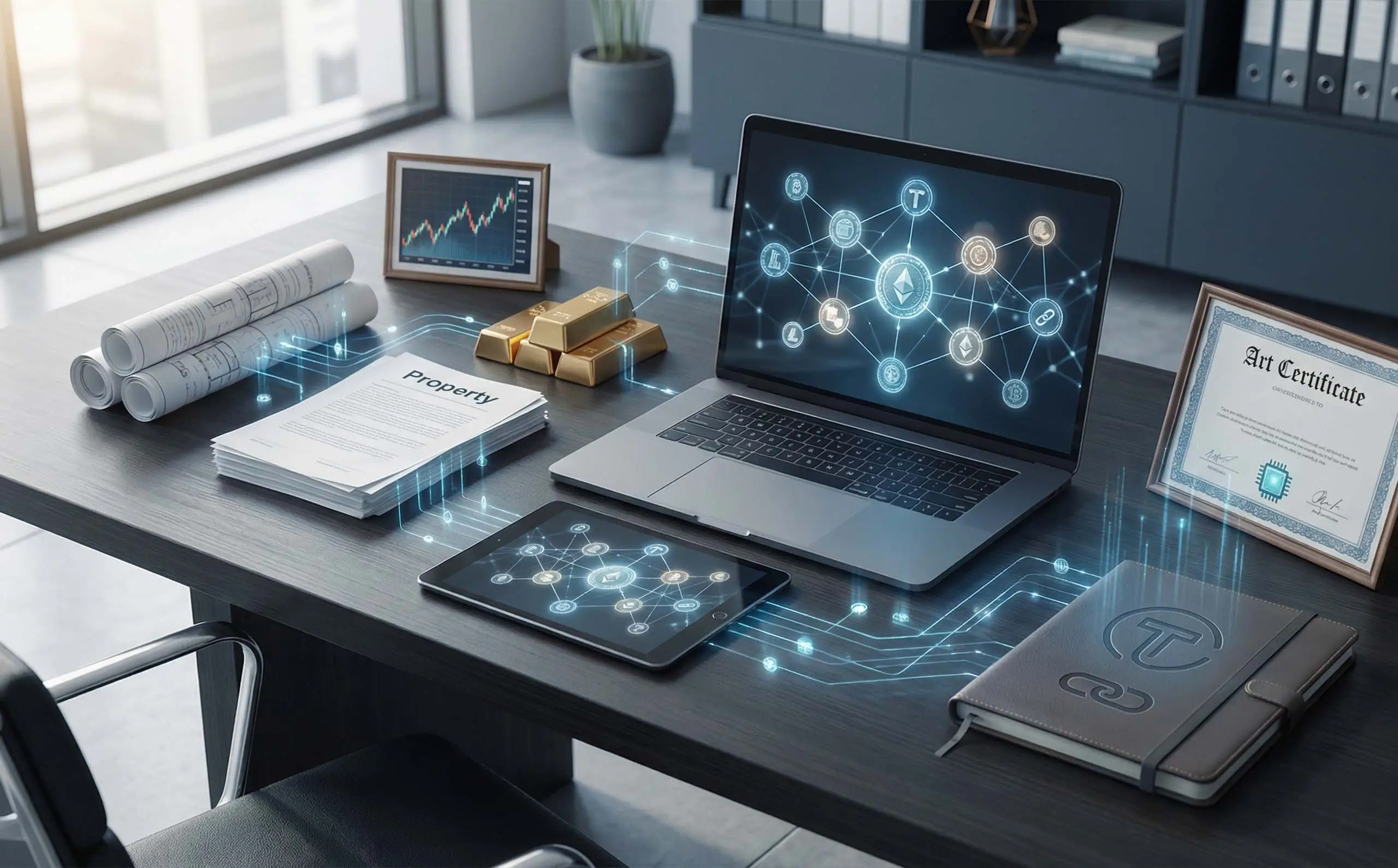

Tokenization of assets expands the range of investor participation by lowering investment thresholds through fractional ownership, improving liquidity for illiquid markets, and enhancing efficiency and transparency through blockchain technology.
Tokenization of assets is the process of fractionizing and converting ownership rights of real-world assets (RWAs) into digitalized units, or tokens, through blockchain technology and smart contracts. The assets can be both physical and intangible, deriving their value from the underlying assets.
Ranging from real estate and equities to commodities and corporate bonds, blockchain asset tokenization is disrupting finance and redefining how value is transferred and managed.
Blockchain technology is the foundational infrastructure for asset tokenization. It provides a decentralized platform where transactions, ownership rights, and rules are written transparently and immutably on the ledger.
Through smart contracts, blockchains automate critical operations such as token issuance, security checks, transfer details, and settlements. This drastically increases security and efficiency, shortens settlement processes, and minimizes transactional errors.
With the foundation of blockchain technology, asset tokenization enhances accessibility and efficiency that traditional systems struggle to achieve.
The digital world is constantly transforming, and accessibility, efficiency, and liquidity remain key concerns for certain asset classes when ownership changes. Asset tokenization is the solution to such issues.
Real estate is traditionally regarded as illiquid, making it difficult for commercial property owners to liquidate their assets for cash. The entire process can sometimes take weeks to finalize, assuming there are potential buyers present in the market.
On the other hand, investing in commercial real estate is extremely costly for small investors, creating a massive gap in the market and the dominance of financial institutions and high-net-worth individuals (HNIs).
Besides real estate, tokenization of assets can be applied to:
The digital model of asset tokenization improves liquidity for illiquid assets and increases the range of investment opportunities for assets traditionally reserved for global corporations, institutional investors, and high-net-worth individuals.
While both are linked to blockchain technology, asset tokenization and cryptocurrencies vary drastically.
Cryptocurrencies are native digital currencies created on blockchain networks and are used for digital payments or as a store of value. Their value derives from the network’s market conditions and dynamics, utilities, and adoption.
On the other hand, asset tokens are digital representations of real-world assets and derive their value from the performance of that particular asset. The value is directly linked to the economic performance and ownership conditions of the underlying assets.
To sum it up, tokenization of assets brings real-world value onto digital infrastructure, while cryptocurrencies represent the digital value of distributed ledger systems.
Blockchain asset tokenization has the potential to disrupt digital finance and revolutionize the dynamics of global markets, significantly impacting asset valuations and settlements as compared to traditional methods.
Asset tokenization enables the creation of hybrid financial products that combine traditional features with digital assets. As a new alternative asset class, tokenized assets enhance portfolio diversification.
Tokenized assets are easier to transfer and trade, converting illiquid assets, such as real estate, into more liquid ones. This improves overall market depth and trading efficiency.
By fractionizing assets into smaller digitized units, asset tokenization lowers barriers to entry. Retail investors can participate in asset classes that were previously inaccessible due to high capital requirements.
Blockchain provides real-time visibility into transactions, ownership records, and asset histories, creating trust and transparency among market participants.
Decentralized settlements reduce intermediary and transaction delays due to blockchain technology, shortening settlement cycles and lowering transaction costs.
Tokenized assets can be accessed by investors worldwide. This improves foreign capital inflows, particularly in emerging markets.
The integration of tokenized assets into decentralized finance enables new markets and investment models, expanding participation and financial inclusion.
Despite its capabilities, asset tokenization faces certain challenges.
Blockchain technology is a complex topic for users. Understanding asset tokenization can be tricky and may create barriers to entry for those accustomed to traditional means.
Regulations governing tokenized assets vary by jurisdiction and asset class, and they continue to change. Legal uncertainty around investor protection and compliance also remains a key consideration.
Many legal systems do not yet completely recognize tokenized ownership. This complicates settlements and the transfer of asset rights.
Maintaining a secure link between the physical asset and its digital representation on the blockchain is very important. Loss, theft, or mismanagement of tokens presents operational risks.
Accurately valuing tokenized assets, especially unique or illiquid ones, can be difficult. Market trading, and secondary markets in particular, may introduce volatility.
Scalability, smart contract vulnerabilities, and incompatibility with legacy financial systems remain ongoing concerns for blockchain.
Taxing tokenized assets is inconsistent globally, creating compliance and reporting challenges for investors and issuers.
Tokenization has raised the standards of asset management, introducing a fundamental digital process that urges the rethinking of how assets are owned, transferred, and financed.
By utilizing blockchain technology, tokenization of assets improves liquidity, enhances accessibility, security, and transparency, and reduces friction across markets.
Although regulatory, legal, and technical challenges exist, institutions and investors worldwide recognize the long-term advantages and inclusion benefits of blockchain asset tokenization.
Asset tokenization is a key module in modernizing financial infrastructure, positioned not only as an innovation but as a core pillar of the next generation of the global financial system.
This communication is intended solely for informational and educational purposes and does not constitute financial, technical, investment, legal, or tax advice. D24 Fintech makes no representation or warranty as to the accuracy, completeness, or reliability of the information provided, including any third-party content, and accepts no liability for any loss or damage arising from its use.
Users are strongly encouraged to conduct their own due diligence, seek guidance from qualified professionals, and ensure compliance with applicable laws and regulations in their respective jurisdictions before engaging in any financial or digital asset activities.
MT5 CRM vs. Traditional CRMs: What’s The Difference?

Spot vs. Derivatives Trading: Key Differences Every Trader Should Know
Developer’s Guide To Building Advanced Spot Trading Platforms
Secure & Scalable Centralized Exchange Development Guide
CEX vs. DEX: Which Exchange Model Suits Your Business?
Blockchain Choices for Your Crypto Exchange Development
How to Build a Private Blockchain Network for Enterprise Solutions
Top Blockchain Frameworks for Fintech Development: A Technical Overview
How CBDCs Could Transform the Digital Asset Ecosystem
The Role of Digital Assets in Cross-Border Payments
Scaling Solutions for Blockchain: Layer 2 Technologies Explained
Smart Contracts: Guide to Building Decentralized Applications

D24 Fintech is a global technology solutions provider, delivering scalable, compliant, and innovative solutions and services tailored for diverse digital and traditional asset ecosystems.

Custom Technology Solutions
Risk And Compliance Solutions
Advanced Infrastructure