Products


 Solutions
 Industries
 Consulting
 Resources
 Company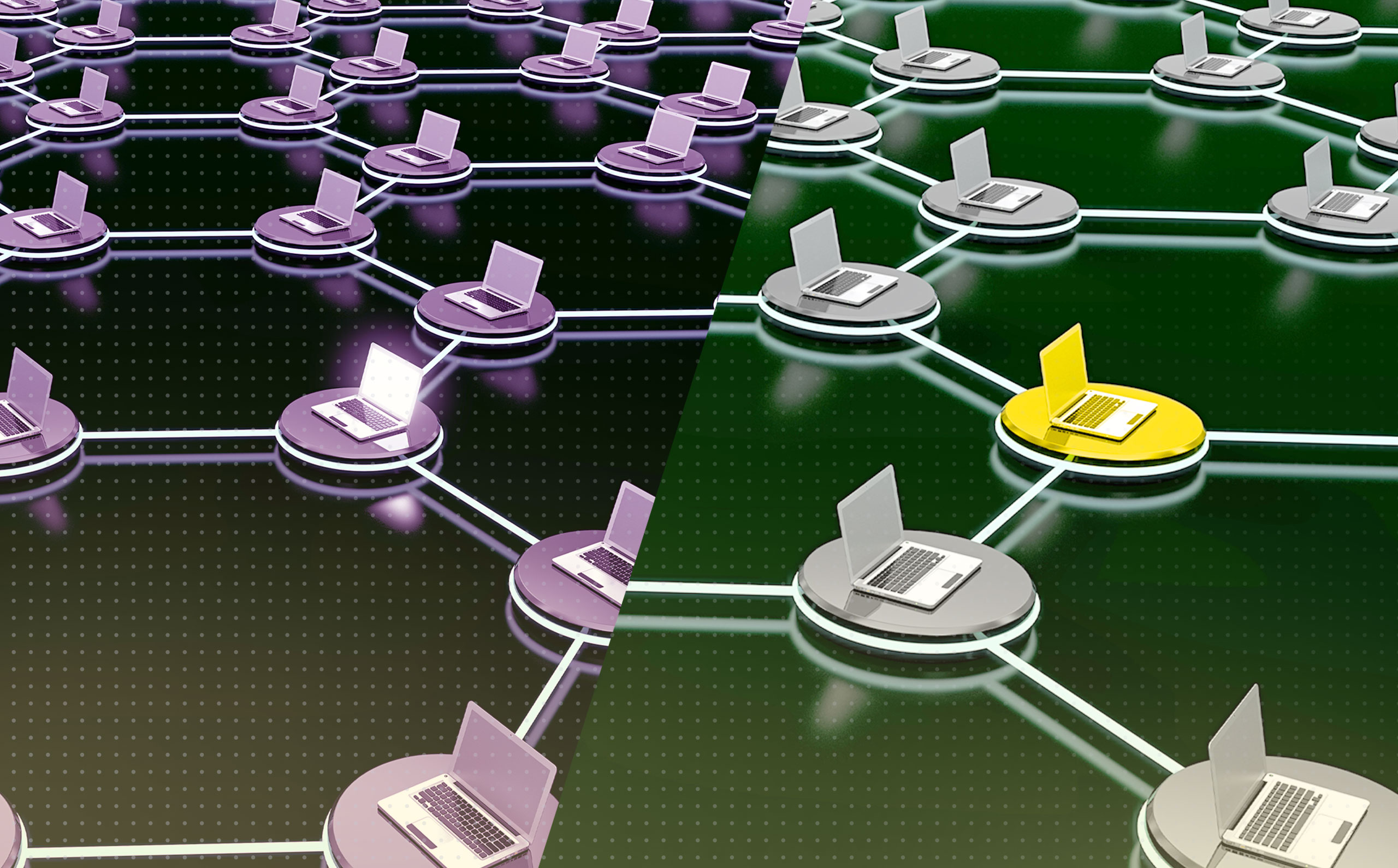
This article examines the evolution of centralized and decentralized exchanges, highlighting their core differences, technological advancements, and positioning in the future of the global digital asset and financial ecosystem.
The digital asset ecosystem has progressed rapidly over the last decade, disrupting global finance and financial technology. At the heart of this evolution are exchanges, one of the most critical components of blockchain. Exchanges are the entry point for millions of users and institutions worldwide. They facilitate seamless buying, selling, and management of digital assets. The two prominent exchange models are centralized exchanges (CEX) and decentralized exchanges (DEX).
At D24 Fintech, we track the development of exchanges and blockchain technology. This is because the evolution of exchange infrastructure directly mirrors the evolution of digital finance itself. It provides enhanced security, greater transparency, and a more accessible financial ecosystem.
But how exactly have CEX and DEX platforms developed over time? What makes them fundamentally different, and how do they shape the broader future of finance?
Centralized exchanges are traditional online platforms that facilitate the buying, selling, and trading of digital assets through a central authority. These platforms operate similarly to conventional financial institutions, acting as intermediaries between users and the market. This central authority manages operations, processes transactions, ensures liquidity, and secures user funds.
Well-known CEX platforms pioneered the first generation of digital trading, providing familiar interfaces, robust infrastructure, and customer support. These features helped bridge Web2 users into the digital asset economy.
Early centralized exchanges focused primarily on simple trading operations. But as the market matured, so did user expectations. This led to innovations such as:
CEX platforms eventually transformed into sophisticated financial ecosystems. They offer staking, derivatives trading, margin services, launchpads, integrated custody solutions, and more.
For most users, particularly institutions, centralized exchanges remain the preferred choice due to their regulated environment, customer support, and efficient trading systems.
Decentralized exchanges, or DEXs, represent a shift toward peer-to-peer trading powered by smart contracts. Unlike centralized exchanges, DEX platforms do not rely on a central authority. Instead, transactions are processed through blockchain protocols, facilitating users to maintain custody of their assets.
Early DEX platforms faced challenges like low liquidity, slower speeds, and complex interfaces. But as blockchain technology matured, especially with advancements in decentralized finance (DeFi), DEXs underwent a significant transformation.
Key improvements include:
Today, DEX platforms form a core pillar of Web3 finance, supporting borderless, permissionless, and transparent trading.
| Category | CEX | DEX | Impact |
| Governance & Control | Centralized authority manages custody, compliance, and operations | Governed by protocols, smart contracts, or DAOs | CEX: supervised environment; DEX: user-driven autonomy |
| Custody & Asset Ownership | Exchanges hold assets in custodial wallets | Users retain assets via self-custody wallets | DEX enhances control; CEX offers convenience |
| Liquidity & Market Depth | High liquidity from institutional participation | Community-driven liquidity pools | Large-volume trades favor CEX; DEX offers transparency |
| Trading Speed | Fast internal order execution | Dependent on blockchain speed | High-frequency trading favors CEX; DEX prioritizes decentralization |
| Security | Centralized storage; multi-layered security | Smart contract vulnerabilities are possible; no central point of failure | Both mature, but risk profiles differ |
| User Experience | Beginner-friendly with customer support | Requires technical knowledge | CEX: guided processes; DEX: autonomy |
| Regulatory Compliance | Operates within legal frameworks | Largely unregulated and permissionless | Compliance is a CEX advantage; innovation is a DEX advantage |
Hybrid exchanges, which combine the efficiency of CEXs with the transparency of DEXs, are emerging. Institutions are exploring self-custody frameworks, permissioned DeFi, and compliant decentralized trading solutions.
At D24 Fintech, we anticipate a coexistence of exchange models:
The evolution of exchanges is central to the future of global digital finance, shaping how users and institutions engage with the digital asset ecosystem.
This communication is intended solely for informational and educational purposes and does not constitute financial, technical, investment, legal, or tax advice. D24 Fintech makes no representation or warranty as to the accuracy, completeness, or reliability of the information provided, including any third-party content, and accepts no liability for any loss or damage arising from its use.
Users are strongly encouraged to conduct their own due diligence, seek guidance from qualified professionals, and ensure compliance with applicable laws and regulations in their respective jurisdictions before engaging in any financial or digital asset activities.
How CBDCs Could Transform the Digital Asset Ecosystem

Secure & Scalable Centralized Exchange Development Guide
The Role of Digital Assets in Cross-Border Payments
Tokenization of Assets: How Blockchain is Transforming Finance
MT5 CRM vs. Traditional CRMs: What’s The Difference?
Blockchain Choices for Your Crypto Exchange Development
Consensus Mechanisms in Blockchain: From PoW to PoS
Spot vs. Derivatives Trading: Key Differences Every Trader Should Know
Developer’s Guide To Building Advanced Spot Trading Platforms
The Rise of Web3: What It Means for Fintech?
Top Blockchain Frameworks for Fintech Development: A Technical Overview
Smart Contracts: Guide to Building Decentralized Applications

D24 Fintech is a global technology solutions provider, delivering scalable, compliant, and innovative solutions and services tailored for diverse digital and traditional asset ecosystems.